
TOPIC 3: WITNESSING AND SERVICE
- Theme: Witnessing for Christ and Living in the Light of God
- Unit: Topic 4
- Sub-Topic Exactly as Listed: Sub-topic 4A: Christian Service & Sub-topic 4B: Witnessing for Christ
- Syllabus Objectives Addressed:
- “The learner describes the biblical meaning of service and witnessing.”
- “Identifies various ways Christians can serve others in the family, school, and wider community.”
- “Examines Jesus Christ as the perfect model of a servant leader.”
- “Demonstrates a commitment to serving others selflessly without expecting immediate rewards.”
- Prerequisite Knowledge: Prior lessons on the miracles of Jesus helping the sick and poor, and basic moral expectations like sharing and kindness.
─────────────────────────────────────────
1. TOPIC INTRODUCTION
─────────────────────────────────────────
- Definition: Christian service (Diakonia) is the act of selflessly helping, giving to, and working for the well-being of others out of love for God. Witnessing is living a lifestyle and speaking words that clearly testify to the character, truth, and saving power of Jesus Christ.
- Real-Life Relevance in Uganda: True Christian service is visible when communities organize voluntary clean-ups of local trading centers, visit inmates in correctional facilities, or provide scholastic materials to orphans and vulnerable children. Witnessing through actions builds trust, promotes transparency, and reduces corruption in our professional settings.
- Hook Scenario: “Imagine the most powerful ruler or politician in your region arriving at a village school. Instead of sitting on a decorated high table to be fanned and served fine meals, this leader rolls up their sleeves, takes a basin of water, kneels down in the dirt, and begins washing the muddy, calloused feet of the school cooks. Would you be shocked? This is exactly what the King of Kings did the night before He died. Let us discover the power of servant leadership and bold Christian witnessing!”
─────────────────────────────────────────
2. LEARNING OBJECTIVES
─────────────────────────────────────────
By the end of this lesson, learners should be able to:
- Explain the biblical concept of Servant Leadership using the example of Jesus washing His disciples’ feet (John 13:1-17).
- Differentiate between serving to receive human praise and serving out of genuine Christian love.
- Identify at least four practical ways a primary seven pupil can witness for Christ within a school community.
- Analyze the scriptural relationship between faith, good works, and effective evangelism.
─────────────────────────────────────────
3. KEY TERMS AND DEFINITIONS
─────────────────────────────────────────
- Servant Leadership: A leadership philosophy where the main goal of the leader is to serve, uplift, and support others, rather than seeking power or material wealth.
- Witness: A person whose lifestyle, choices, and speech provide clear evidence of the reality and love of Jesus Christ.
- Evangelism: The public or personal announcement of the Good News of the Gospel, inviting others into a relationship with God.
- Selflessness: The noble quality of caring more about the needs, safety, and happiness of other people than your own.
- Analogy: A true Christian servant is like a candle; it willingly consumes its own wax and resource base to provide light and warmth for everyone else in a dark room.
- Hypocrisy: Pretending to have moral standards or religious beliefs to which one’s actual behavior does not conform.
─────────────────────────────────────────
4. DETAILED EXPLANATION OF CONCEPTS
─────────────────────────────────────────
Concept A: Jesus Christ as the Supreme Servant (John 13:1-17)
In ancient Jewish culture, washing the feet of guests was a dirty chore reserved exclusively for the lowest household slaves. During the Last Supper, Jesus stood up, took off His outer clothing, wrapped a towel around His waist, poured water into a basin, and began washing His disciples’ feet.
- The Structural Lesson: Jesus completely overturned human ideas of power. He stated, “Now that I, your Lord and Teacher, have washed your feet, you also should wash one another’s feet. I have set you an example that you should do as I have done for you” (John 13:14-15).
- Application: True greatness in the kingdom of God is measured by how submissively and willingly you serve those who can offer you nothing in return.
Concept B: Avenues of Christian Service
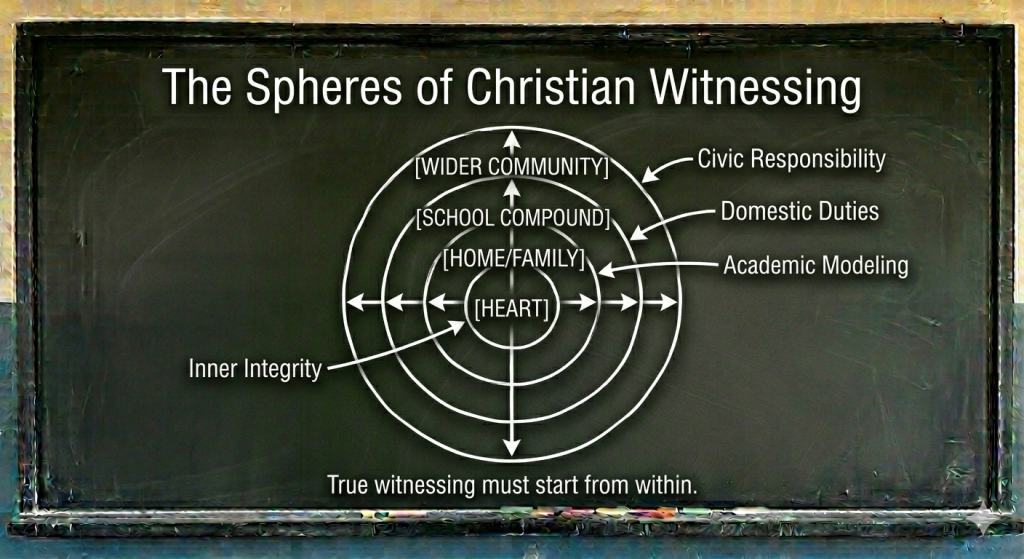
Christian service is multi-dimensional and manifests across different spheres of daily life:
- In the Family: Helping parents with household chores without grumbling, looking after younger siblings, and taking care of elderly relatives.
- In the School: Tutoring classmates who struggle with difficult subjects, picking up litter, respecting teachers, and showing kindness to new or lonely students.
- In the Community: Volunteering in church ministries, protecting community water sources, and comforting families that are mourning.
Concept C: Witnessing Through Actions and Words (The Matthew 5 Mandate)
Jesus commanded His followers to be the “salt of the earth” and the “light of the world.” Witnessing fails if there is a gap between what we say and how we live.
- Action Witnessing: Being honest when handling school club finances, refusing to participate in strikes or cheating, and showing forgiveness when wronged.
- Verbal Witnessing: Telling friends about God’s love, leading prayers, comforting people with Bible verses, and standing up against bad language or bullying.
Comparison Table: Authentic Service vs. Superficial Service
| Aspect | Authentic Christian Service | Superficial / Selfish Service |
| Primary Motivation | Love for Jesus Christ and genuine empathy for people. | Desires human praise, political popularity, or financial rewards. |
| Visibility Requirement | Done cheerfully, even in secret or complete isolation. | Needs an audience, cameras, or public recognition to operate. |
| Reaction to Criticism | Remains humble, steady, and continues working faithfully. | Becomes angry, offended, or abandons the task completely. |
| Target Audience | Focuses heavily on the poor, vulnerable, and forgotten. | Seeks out influential leaders or people who can return favors. |
─────────────────────────────────────────
5. TEACHER DEMONSTRATIONS / PRACTICAL ACTIVITIES
─────────────────────────────────────────
Activity: The “Secret Servant” Campaign
- Aim: To encourage learners to practice anonymous Christian service without seeking human praise or rewards.
- Materials: Small slips of paper, a small box or tin labeled “Service Box”.
- Procedure:
- Have every pupil write their name secretly on a slip of paper. Fold the slips and place them in the box.
- Let each pupil draw one random slip out of the box. They must keep the name written on it a complete secret.
- The Assignment: For the next one week, each pupil must perform at least two acts of helpful service for that secret person (e.g., sharpening their pencil when they step out, organizing their desk, or leaving an encouraging Bible verse note) without getting caught or revealing their identity.
- Expected Observations: Classrooms become highly cooperative and joyous spaces. At the end of the week, debrief the class on how it feels to receive help anonymously, and how it feels to serve purely for God’s joy rather than public praise.
─────────────────────────────────────────
6. LEARNER ACTIVITIES
─────────────────────────────────────────
Classroom Activity 1: Scripture Text Analysis (Group Task)
- Objective: Interrogate biblical narratives on selfless ministry and apply moral metrics.
- Task: Read Matthew 25:34-40 and answer the following questions:
- List three examples of physical care or service mentioned by the King that inherited the kingdom.
- What surprising question did the righteous people ask the King regarding their service acts?
- What deep secret does Jesus reveal in verse 40 about how He views any service given to the poor or suffering?
Classroom Activity 2: Structural Application Drill
- Objective: Connect theoretical concepts of servant leadership to everyday pupil scenarios.
- Task: Complete the missing sections or solve the situational dilemmas logically:
- Peter refuses to sweep the classroom because he is the class monitor. He believes a monitor is too important to clean. The bible story that directly corrects Peter’s style of leadership is ____________.
- Christian witnessing is incomplete if a person speaks beautifully about God but practices ____________ in their private life.
- Name two organizations or professionals in Uganda whose primary daily responsibility is dedicated to public Christian service: ____________ and ____________.
Formative Assessment
- Spelling Identification: Fix the misspelled service words: evanjelism, servanthood, hipocrisy.
- Short Answer: Why did the Apostle Peter initially refuse to let Jesus wash his feet during the Last Supper?
- Application Thinking: Write a short four-sentence letter to a school prefect who uses their leadership title to bully younger students, demand their snacks, and make them perform personal favors. Use the concept of Servant Leadership to guide your advice.
Marking Guide:
- Evangelism, Servanthood, Hypocrisy.
- Because he felt it was too humiliating and improper for his Lord and Master to perform a slave’s chore for him.
- Award full marks for advice reflecting John 13 or Mark 10:43-45 (e.g., Leadership is given by God to protect and support students, not to mistreat them. Jesus taught that the greatest leader must be the servant of all. Please stop taking snacks from younger pupils. Real authority comes from setting a good example of love and service.)
Further Reading
- Fountain Christian Religious Education Pupil’s Book 7, Unit 4.
- The Holy Bible: John 13:1-17, Matthew 5:13-16, Matthew 25:31-46, James 2:14-18.
─────────────────────────────────────────
7. COMMON MISCONCEPTIONS
─────────────────────────────────────────
- Misconception: Thinking that witnessing for Christ can only be done by ordained bishops, pastors, or priests standing behind a church pulpit.
- Correction: Every Christian, including a Primary Seven pupil, is called to be a witness through their daily character, speech, and attitude wherever they are.
- Misconception: Believing that a servant leader is weak, timid, and allows people to break rules or behave badly without correction.
- Correction: Servant leadership requires immense courage and strength. Jesus was a servant leader, yet He spoke the truth boldly, corrected wrong behavior, and maintained perfect discipline.
─────────────────────────────────────────
8. SUMMARY NOTES FOR PUPILS
─────────────────────────────────────────
- The Golden Standard: Jesus revolutionized leadership by washing His disciples’ feet, proving that true leaders are servant leaders.
- The Living Testimony: Witnessing means being the salt and light of your community. It requires your words to match your actions perfectly.
- The Ultimate Measurement: Jesus teaches that whenever we serve the poor, visit the sick, or help the vulnerable, we are doing it directly unto Him.
─────────────────────────────────────────
9. EXAMINATION FOCUS (UNEB-Style)
─────────────────────────────────────────
a) Section A: Short Answer Questions (1 Mark Each)
- What does the word Gospel mean?
- Give one way a primary seven candidate can witness for Christ during examination periods.
- State one lesson Christians learn from the lifestyle of the Early Church in the book of Acts.
- Name the apostle who wrote that “faith without good works is dead.”
- Answers: 1. Good News, 2. By refusing to engage in exam cheating / remaining calm and trusting God / encouraging classmates, 3. Sharing resources with those in need / praying together in unity, 4. James.
b) Section B: Structural Essay Questions (4 Marks Each)
- “In the Kingdom of God, the path to greatness is through service.”
- a) State two reasons why Jesus washed His disciples’ feet during the Last Supper.
- b) Identify two challenges modern Christians face when trying to witness for Christ in their communities.
- Answers:
- a) (i) To show them the full extent of His love. (ii) To give them a practical example of humility and servant leadership.
- b) (i) Peer pressure and fear of being laughed at or rejected. (ii) Bad examples or hypocrisy from some religious leaders that discourages people.
─────────────────────────────────────────
10. HIGHER ORDER THINKING QUESTIONS
─────────────────────────────────────────
- Analyze: Why is it that witnessing through an honest, quiet lifestyle often influences people far more deeply than standing on a street corner shouting into a megaphone? How do actions speak louder than words in religious life?
- Evaluate: Suppose a local charity organization donates tons of food and medicine to a village school, but they make sure to print their corporate logo on every item and take photographs for newspapers to show off their generosity. Evaluate this action based on Jesus’ teaching on authentic service.
─────────────────────────────────────────
11. TEACHING TIPS
─────────────────────────────────────────
- Strategy: Use “Role-Play Drama.” Have one pupil act as an arrogant, demanding ruler and another act as a quiet, hardworking servant leader. Let the class analyze which style creates a safer and more productive community.
- Mnemonic Support: S.A.L.T. $\rightarrow$ Serve All Lovingholders Truthfully! This is the goal of a true witness.
─────────────────────────────────────────
12. GLOSSARY
─────────────────────────────────────────
- Diakonia: A Greek biblical word meaning service, ministration, or voluntary assistance rendered to the needy.
- Evangel The good news of the coming of the Kingdom of God and of salvation through Christ.
- Integrity: The practice of being honest and showing a consistent, uncompromising adherence to strong moral and ethical principles.
─────────────────────────────────────────
END: KEY TAKEAWAY FOR LEARNERS
─────────────────────────────────────────
You do not need to wait until you are older or have a prominent title to be great in the eyes of God. True greatness begins today when you choose to look out for the needs of your family, your classmates, and the vulnerable around you. By practicing servant leadership, working hard without demanding a reward, and keeping your character clean, you become a powerful, living witness for Christ. Let your light shine so bright that when people see your good works, they will praise your Father in Heaven!
 Introduction to Clothing and Textiles – Senior Five Learner’s Guide
 Introduction to Islamic Religious Education (IRE) – Senior Six Learner’s Guide
 PERFORMING ARTS SENIOR TWO LEARNERS’ GUIDEOrdinary Secondary level
 - PERFORMING ARTS SENIOR TWO TEACHERS’ GUIDEOrdinary Secondary level
 Introduction to Islamic Religious Education (IRE) – Senior Five Learners’ Guide
 NUTRITION AND FOOD TECHNOLOGY SENIOR TWO LEARNERS’ GUIDE
- NUTRITION AND FOOD TECHNOLOGY SENIOR TWO TEACHERS’ GUIDEOrdinary Secondary level
 MATHEMATICS SENIOR TWO LEARNERS’ GUIDEOrdinary Secondary level
 - MATHEMATICS SENIOR TWO TEACHERS’ GUIDEOrdinary Secondary level
 LITERATURE IN ENGLISH SENIOR TWO LEARNERS’ GUIDEOrdinary Secondary level
 Enjoy learning with Yaaka Digital NetworkUncategorized
 Why We Must Accelerate Digital Learning: A Shared Responsibility for Learners, Teachers, Schools, Development Partners and GovernmentUncategorized
 AD3: Three-Dimensional Arts: CarvingUncategorized
 AD3: Drawing and Painting: Still LifeUncategorized
 AD3: Drawing And Painting: PerspectiveUncategorized
- Enjoy learning with Yaaka Digital NetworkUncategorized
- Why We Must Accelerate Digital Learning: A Shared Responsibility for Learners, Teachers, Schools, Development Partners and GovernmentUncategorized
- AD3: Three-Dimensional Arts: CarvingUncategorized
- AD3: Drawing and Painting: Still LifeUncategorized
- AD3: Drawing And Painting: PerspectiveUncategorized
 AD3: Three-Dimensional Arts: Relief SculptureUncategorized
- Topic 2: Electricity and MagnetismUncategorized
- Topic 1: The Muscular-Skeletal SystemUncategorized
- TOPIC 4: ISLAMIC HISTORY AND MUSLIM ORGANISATIONS (UMSC/UMEA)Uncategorized
- TOPIC 3: FIQH (HIJJ AND FORBIDDEN PRACTICES)Uncategorized
Products
-
 Books & Novels
$ 79
Books & Novels
$ 79
-
Whole subject
$ 29
-
Ultimate Plus
$ 999
-
Ultimate
$ 299
-
Gold
$ 99

0 responses on "TOPIC 3: WITNESSING AND SERVICE"