
TOPIC 2: THE CHRISTIAN TRADITION AND CHURCH LIFE
- Theme: Witnessing for Christ and Living in the Light of God
- Unit: Topic 2
- Sub-Topic Exactly as Listed: Sub-topic 2A: The Fall of Man (Origin of Sin) & Sub-topic 2B: God’s Plan for Salvation
- Syllabus Objectives Addressed:
- “The learner explains the origin of sin and its immediate and long-term consequences on humanity.”
- “Identifies the various manifestations of sin in modern society.”
- “Describes God’s unfolding plan of redemption through Biblical covenants culminating in Jesus Christ.”
- “Appreciates the value of repentance, forgiveness, and reconciliation.”
- Prerequisite Knowledge: Familiarity with the story of Adam, Eve, and the serpent in the Garden of Eden from lower primary classes.
─────────────────────────────────────────
1. TOPIC INTRODUCTION
─────────────────────────────────────────
- Definition: The Fall of Man refers to the transition of the first humans from a state of innocent obedience to God to a state of guilty disobedience (sin). Salvation is God’s divine rescue plan to deliver humanity from the power and penalty of sin, restoring the broken relationship between God and people.
- Real-Life Relevance in Uganda: We see the consequences of the Fall every day around us in the form of greed, corruption, theft, land disputes, hatred, and family breakdowns. Understanding God’s plan for salvation teaches us that we do not have to remain trapped in bad habits; through Christ, we can live transformed lives that bring peace, honesty, and unity to our Ugandan communities.
- Hook Scenario: “Imagine you are given a beautiful, clean white uniform to wear for a national celebration. Before you step onto the stage, you deliberately ignore your teacher’s warning and walk through a muddy swamp. Your uniform is ruined, stained, and smelling foul. You cannot clean it yourself, no matter how hard you scrub. This is what happened to the human heart in Eden. How did the stain of sin enter our world, and who is the master cleaner sent to wash us completely white again? Let us explore the journey from brokenness to rescue!”
─────────────────────────────────────────
2. LEARNING OBJECTIVES
─────────────────────────────────────────
By the end of this lesson, learners should be able to:
- Analyze the steps that led to the first disobedience in Genesis 3 and identify the immediate consequences of their choice.
- Define sin and list at least four ways it manifests in modern schools and communities.
- Trace God’s salvation initiatives through the Old Testament covenants (Noah, Abraham, Moses) to their fulfillment in Jesus Christ.
- Explain the roles of repentance and faith in receiving God’s gift of salvation.
─────────────────────────────────────────
3. KEY TERMS AND DEFINITIONS
─────────────────────────────────────────
- Sin: Any deliberate thought, word, action, or omission that breaks God’s holy law and falls short of His glory.
- The Fall: The historical and theological event where Adam and Eve disobeyed God’s direct command, bringing sin and death into the world.
- Alienation: The state of emotional or spiritual separation and isolation that occurred between God and humanity after the first sin.
- Covenant: A sacred, binding agreement made between God and human beings, established with promises, signs, and obligations.
- Salvation / Redemption: The act of buying back or saving humanity from the captivity of sin through the sacrificial death and resurrection of Jesus Christ.
- Analogy: Salvation is like a prison warden opening the heavy iron doors for a captive who could never afford their own bail money, paying the fine in full, and welcoming them home as a free citizen.
─────────────────────────────────────────
4. DETAILED EXPLANATION OF CONCEPTS
─────────────────────────────────────────
Concept A: The Disobedience and Its Consequences (Genesis 3)
God placed Adam and Eve in the perfect Garden of Eden, giving them total freedom with only one restriction: “You must not eat from the tree of the knowledge of good and evil, for when you eat from it you will certainly die” (Genesis 2:17).
The process of the Fall involved:
- Temptation: The serpent made Eve doubt God’s goodness and truthfulness.
- Deception & Pride: Eve saw that the fruit was pleasant to look at and desirable for gaining wisdom.
- Disobedience: Eve ate the fruit and gave some to Adam, who also ate it willfully.
Immediate Consequences of the Fall:
- Shame and Fear: They realized they were naked and hid from God’s presence when He came walking in the cool of the day.
- The Blame Game: Adam blamed Eve (and implicitly blamed God for giving her to him); Eve blamed the serpent. No one took responsibility.
- Curse and Separation: Hard labor was introduced for farming, pain in childbearing, and physical and spiritual death entered the human experience. They were expelled from the Garden.
Concept B: Manifestations of Sin in Modern Society
The root of sin remains the same today: choosing our own selfish path over God’s perfect laws. In a primary school setting or local community, sin manifests as:
- Academic Dishonesty: Cheating in exams or copying someone else’s homework.
- Social Ills: Lying, gossiping, bullying, tribalism, and stealing school supplies.
- Community Evils: Corruption among leaders, embezzlement of public funds, violence, and environmental destruction.
Concept C: God’s Unfolding Salvation Plan
God did not abandon humanity in their ruined state. He immediately promised a Savior in Genesis 3:15 (often called the Protoevangelium or the first gospel presentation), stating that the seed of the woman would eventually crush the serpent’s head. He built this rescue path through progressive covenants:
- The Noahic Covenant (Genesis 9): God promised never to destroy the earth again with a flood, using the rainbow as a permanent sign of His patience and mercy.
- The Abrahamic Covenant (Genesis 12 & 15): God chose Abraham, promising to make him a great nation through whom all families of the earth would be blessed. This set apart the line for the Messiah.
- The Mosaic Covenant (Exodus 20): God gave the Ten Commandments to guide the Israelites in holy living, showing them their need for a perfect savior.
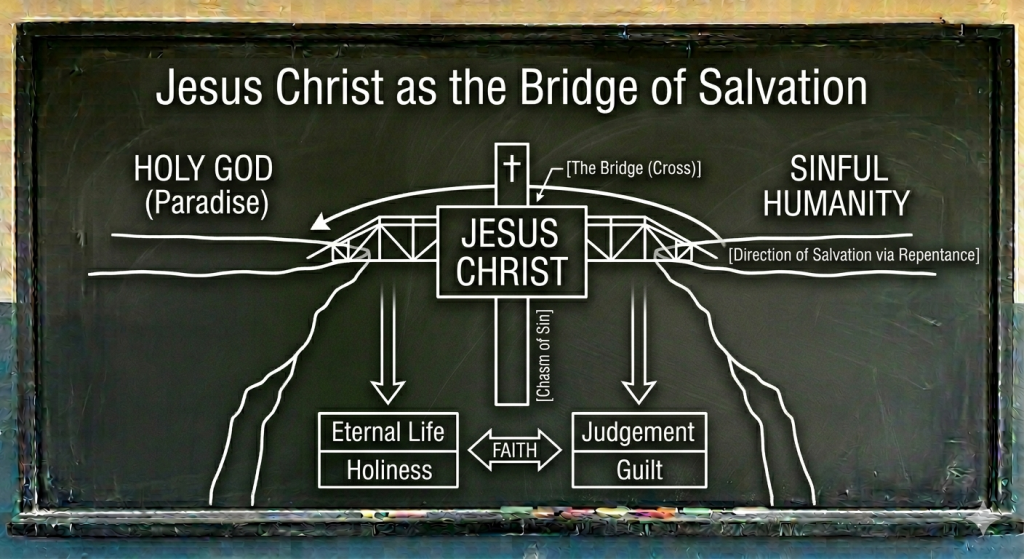
- The New Covenant (Fulfillment in Jesus): Jesus Christ, the sinless Son of God, died on the cross at Calvary. He took the full punishment for human sin and rose from the dead on the third day, offering free salvation to anyone who repents and believes in Him.
Comparison Table: Covenants and Signs
| Covenant Maker | Main Focus / Divine Promise | Visible Sign given by God | Bible Reference |
| Noah | Preservation of life; no more universal destruction by water. | The Rainbow in the sky. | Genesis 9 |
| Abraham | Multiplied descendants; inheritance of land; a global blessing. | Circumcision. | Genesis 17 |
| Moses | Law and guidelines for a chosen, holy priesthood nation. | The Stone Tablets of the Law. | Exodus 24 |
| Jesus Christ | Complete forgiveness of sins; eternal life; direct access to God. | The Holy Communion (Bread & Wine / His Blood). | Luke 22; Hebrews 9 |
─────────────────────────────────────────
5. TEACHER DEMONSTRATIONS / PRACTICAL ACTIVITIES
─────────────────────────────────────────
Activity: The “Broken Rope” Relationship Demonstration
- Aim: To visually demonstrate how sin severs a relationship and how reconciliation requires structural mending from an outside source.
- Materials: A 2-meter long piece of local sisal or cotton rope, a pair of scissors, a label tag marked “Fellowship with God”.
- Procedure:
- Hold up the intact rope, representing the perfect relationship between God and humanity in Eden.
- Ask a pupil to call out a sin (e.g., “Disobedience”). Take the scissors and cut the rope right in the middle. Hold the two separated ends apart.
- Show that the gap represents alienation. Ask a pupil to try and stick the rope back together just by rubbing the edges or blowing on them. It will fail.
- Take a central piece of string labeled “Jesus” and tie the two severed ends securely back together into a firm knot.
- Expected Observations: Learners will see that once a relationship is broken, it cannot fix itself automatically. Human effort alone cannot bridge the gap; it requires the intervention of Jesus Christ to bring reconciliation.
─────────────────────────────────────────
6. LEARNER ACTIVITIES
─────────────────────────────────────────
Classroom Activity 1: Biblical Text Analysis (Group Work)
- Objective: Read foundational scriptures on salvation and extract thematic values.
- Task: Read Luke 19:1-10 (The story of Zacchaeus the tax collector) and answer the following questions:
- Identify two ways Zacchaeus had been manifesting sin in his career before meeting Jesus.
- What action did Zacchaeus take that proved he had truly repented of his past sins?
- Which verse in this passage summarizes the entire purpose of Jesus coming down to earth?
Classroom Activity 2: Structural Reflection Drill
- Objective: Correctly arrange salvation progression and practical responses.
- Task: Match the Old Testament figures to their specific salvation roles or complete the structural gaps:
- Abraham was called by God to leave his father’s house in order to… (Complete the promise).
- True repentance involves three distinct steps: Recognizing the sin, feeling godly sorrow for it, and completely ____________ away from it.
- Write down two examples of how a Primary Seven pupil can show that they are walking in “the light of salvation” while at school.
Formative Assessment
- Spelling Correction: Fix the broken theological terms: salvashon, covynant, aljenation.
- Grammar Fill: For it is by grace you have been saved, through __________—and this is not from yourselves, it is the gift of God. (works / laws / faith).
- Application Thinking: Your classmate confesses to you that they stole a text textbook from the library. They say, “I will just pray and ask God for forgiveness tonight, but I will keep the book at home.” Write three sentences advising your classmate on the difference between true repentance and false confession, based on Christian principles.
Marking Guide:
- Salvation, Covenant, Alienation.
- faith (Ephesians 2:8)
- Award full marks for advice highlighting that true repentance requires confession and restoration/restitution (e.g., God looks at the sincerity of your heart, not just empty words. Keeping the stolen book proves you haven’t truly turned away from the sin. True repentance requires you to return the book to the school library.)
Further Reading
- Fountain Christian Religious Education Pupil’s Book 7, Unit 2.
- The Holy Bible: Genesis 3, Genesis 15, Exodus 20, Romans 3:23, Ephesians 2:1-10.
─────────────────────────────────────────
7. COMMON MISCONCEPTIONS
─────────────────────────────────────────
- Misconception: Believing that Adam and Eve sinned because they ate a physical apple tree fruit that was poisonous in itself.
- Correction: The Bible does not name the specific fruit as an apple. The sin was not about the nutritional value of the fruit, but rather the heart act of willful disobedience against a direct boundary set by God.
- Misconception: Thinking that a person can buy or earn their salvation by doing good deeds, donating money to the church, or keeping school rules perfectly.
- Correction: Salvation is a free gift of God’s grace. Good works are the fruit or result of being saved; they can never be the root or cause of our salvation.
─────────────────────────────────────────
8. SUMMARY NOTES FOR PUPILS
─────────────────────────────────────────
- The Root Problem: Sin began with a spirit of pride and disobedience in Eden, leading to the Fall of Man and spiritual alienation from God.
- The Consequences: Sin causes fear, shame, blame-shifting, and structural brokenness in our modern lives.
- The Divine Rescue: God initiated covenants with Noah, Abraham, and Moses, pointing directly to the final sacrifice of Jesus Christ on the Cross, which provides complete salvation to all who believe.
─────────────────────────────────────────
9. EXAMINATION FOCUS (UNEB-Style)
─────────────────────────────────────────
a) Section A: Short Answer Questions (1 Mark Each)
- Who tempted Eve to eat the forbidden fruit in the Garden of Eden?
- State any one immediate consequence of sin shown by Adam and Eve when God called them.
- Name the sign of the covenant that God made with Abraham.
- Give one way Jesus Christ brought salvation to humanity.
- Answers: 1. The serpent (Satan), 2. They hid themselves out of fear / felt shame because of their nakedness / shifted blame, 3. Circumcision, 4. By dying for our sins on the cross / rising from the dead.
b) Section B: Structural Essay Questions (4 Marks Each)
- “God has always taken the initiative to save His people whenever they fall into brokenness.”
- a) Identify any two covenants God made with His people in the Old Testament.
- b) Give two reasons why Jesus Christ is considered the perfect fulfillment of God’s salvation plan.
- Answers:
- a) (i) Covenant with Noah (ii) Covenant with Abraham / Mosaic Covenant at Mount Sinai.
- b) (i) Unlike animals sacrificed in the Old Testament, Jesus was a sinless human who died once and for all. (ii) He defeated death by rising again, offering eternal life to all nations.
─────────────────────────────────────────
10. HIGHER ORDER THINKING QUESTIONS
─────────────────────────────────────────
- Analyze: Why do you think Adam and Eve immediately chose to hide and blame each other instead of running directly to God to ask for forgiveness after eating the fruit? How does this same pattern show up when people commit crimes or break rules today?
- Evaluate: Imagine a community where everyone claims to be a saved Christian, but the local market stalls frequently report theft, and the municipal water supply is regularly polluted with household garbage. Evaluate the authenticity of the salvation being practiced in that community.
─────────────────────────────────────────
11. TEACHING TIPS
─────────────────────────────────────────
- Strategy: Use the acronym S.I.N. to help pupils evaluate actions during school hours: Selfish choices, Ignoring instructions, Neglecting duties. Follow up immediately by teaching the beauty of restoration through Christ.
- Mnemonic Support: G.R.A.C.E. $\rightarrow$ God’s Riches At Christ’s Expense! This is the formula for salvation.
─────────────────────────────────────────
12. GLOSSARY
─────────────────────────────────────────
- Manifestation: An outward, clearly visible sign, symptom, or display of an inward condition or reality.
- Protoevangelium: A theological term meaning “First Gospel,” referring to Genesis 3:15, where God declares the ultimate defeat of evil.
- Reconciliation: The restoration of friendly, peaceful relations between two parties after a period of dispute or estrangement.
─────────────────────────────────────────
END: KEY TAKEAWAY FOR LEARNERS
─────────────────────────────────────────
Though the story of humanity began with a tragic fall into disobedience, God did not leave us to suffer in our brokenness. From the very beginning, His heart was full of love and mercy, weaving a magnificent rescue plan through history that found its perfect completion on the cross of Jesus. By turning away from selfish choices and trusting in Christ, you can experience true freedom, clean uniform hearts, and live as a shining light of love and honesty in Uganda!
 Introduction to Clothing and Textiles – Senior Five Learner’s Guide
 Introduction to Islamic Religious Education (IRE) – Senior Six Learner’s Guide
 PERFORMING ARTS SENIOR TWO LEARNERS’ GUIDEOrdinary Secondary level
 - PERFORMING ARTS SENIOR TWO TEACHERS’ GUIDEOrdinary Secondary level
 Introduction to Islamic Religious Education (IRE) – Senior Five Learners’ Guide
 NUTRITION AND FOOD TECHNOLOGY SENIOR TWO LEARNERS’ GUIDE
- NUTRITION AND FOOD TECHNOLOGY SENIOR TWO TEACHERS’ GUIDEOrdinary Secondary level
 MATHEMATICS SENIOR TWO LEARNERS’ GUIDEOrdinary Secondary level
 - MATHEMATICS SENIOR TWO TEACHERS’ GUIDEOrdinary Secondary level
 LITERATURE IN ENGLISH SENIOR TWO LEARNERS’ GUIDEOrdinary Secondary level
 Enjoy learning with Yaaka Digital NetworkUncategorized
 Why We Must Accelerate Digital Learning: A Shared Responsibility for Learners, Teachers, Schools, Development Partners and GovernmentUncategorized
 AD3: Three-Dimensional Arts: CarvingUncategorized
 AD3: Drawing and Painting: Still LifeUncategorized
 AD3: Drawing And Painting: PerspectiveUncategorized
- Enjoy learning with Yaaka Digital NetworkUncategorized
- Why We Must Accelerate Digital Learning: A Shared Responsibility for Learners, Teachers, Schools, Development Partners and GovernmentUncategorized
- AD3: Three-Dimensional Arts: CarvingUncategorized
- AD3: Drawing and Painting: Still LifeUncategorized
- AD3: Drawing And Painting: PerspectiveUncategorized
 AD3: Three-Dimensional Arts: Relief SculptureUncategorized
- Topic 2: Electricity and MagnetismUncategorized
- Topic 1: The Muscular-Skeletal SystemUncategorized
- TOPIC 4: ISLAMIC HISTORY AND MUSLIM ORGANISATIONS (UMSC/UMEA)Uncategorized
- TOPIC 3: FIQH (HIJJ AND FORBIDDEN PRACTICES)Uncategorized
Products
-
 Books & Novels
$ 79
Books & Novels
$ 79
-
Whole subject
$ 29
-
Ultimate Plus
$ 999
-
Ultimate
$ 299
-
Gold
$ 99

0 responses on "TOPIC 2: THE CHRISTIAN TRADITION AND CHURCH LIFE"