
TOPIC 1: GOD’S PLAN FOR REDEMPTION AND SALVATION
- Theme: Witnessing for Christ and Living in the Light of God
- Unit: Topic 1
- Sub-Topic Exactly as Listed: Sub-topic 1A: God’s Purpose for Creating Us & Sub-topic 1B: Talents and Gifts as Stewardship
- Syllabus Objectives Addressed:
- “The learner identifies God’s unique purpose for creating human beings in His image.”
- “Describes how to discover, develop, and use individual talents responsibly.”
- “Appreciates the Christian concept of stewardship and accountability over God’s creation.”
- “Reads, interprets, and applies relevant Biblical passages to daily living.”
- Prerequisite Knowledge: Prior exposure to the Genesis story of Creation and the parables of Jesus from lower primary CRE lessons.
─────────────────────────────────────────
1. TOPIC INTRODUCTION
─────────────────────────────────────────
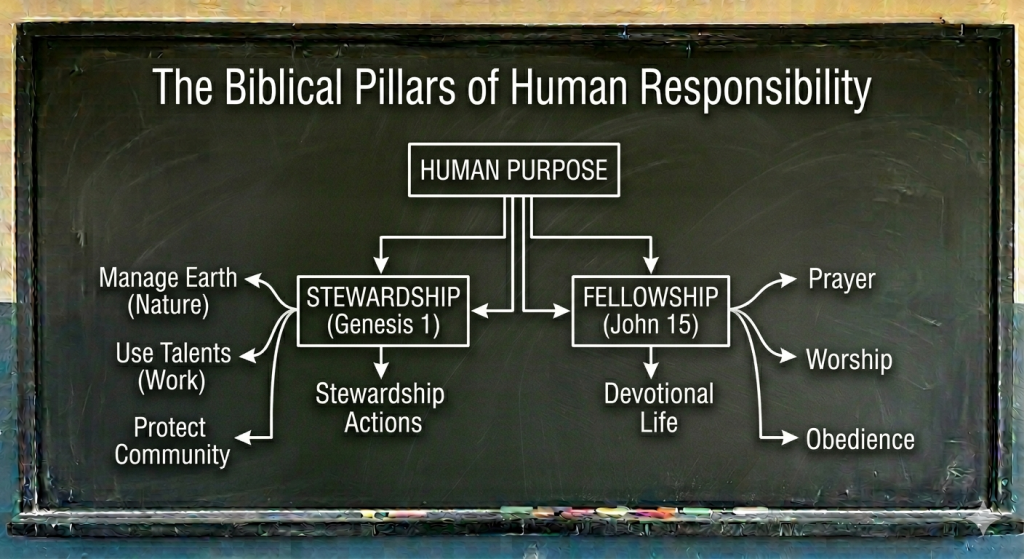
- Definition: God’s purpose refers to the divine intention behind the creation of humanity—to live in full fellowship with God, reflect His holy character, and manage the earth. Stewardship is the responsible oversight, care, and accountability of resources, talents, and environments entrusted to humans by God.
- Real-Life Relevance in Uganda: In our local communities, we use our varied gifts—whether it is singing in a church choir, farming crops to feed our households, or studying diligently to become doctors or teachers—to serve others. Recognizing that everything we have is an assignment from God helps reduce corruption, laziness, and environmental destruction in Uganda.
- Hook Scenario: “Imagine a wealthy farm owner in western Uganda who gives three workers different amounts of money to manage while he travels to Kampala. One worker multiplies his share, the second does the same, but the third digs a hole and buries his out of fear. When the master returns, what will he say? Why did God give us different skills, and what will we tell Him when He asks us how we used them? Let us discover our divine purpose!”
─────────────────────────────────────────
2. LEARNING OBJECTIVES
─────────────────────────────────────────
By the end of this lesson, learners should be able to:
- Explain the theological significance of humans being created in the “Image and Likeness of God” (Genesis 1:26-28).
- Differentiate between natural talents and spiritual gifts.
- Analyze the Parable of the Talents (Matthew 25:14-30) and relate its message to personal and academic responsibility.
- Formulate a personal pledge detailing how to use their intellectual or creative gifts to serve their community.
─────────────────────────────────────────
3. KEY TERMS AND DEFINITIONS
─────────────────────────────────────────
- Imago Dei (Image of God): The theological term showing that humans are created to reflect God’s character, moral capacity, and spiritual nature.
- Stewardship: The holy duty of caring for, protecting, and multiplying the resources that God has put in our hands.
- Talent: A natural, inherent ability or skill that a person is born with (e.g., drawing, running, public speaking).
- Spiritual Gift: A special ability given by the Holy Spirit to a believer to build up the church and serve the body of Christ (e.g., prophecy, teaching, administration).
- Analogy: A talent is like a seed you are born with; if you don’t water it through hard work, prayer, and training, it will never grow into a fruit-bearing tree.
- Accountability: The requirement to explain or justify one’s actions, choices, and use of resources before an authority figure or God.
─────────────────────────────────────────
4. DETAILED EXPLANATION OF CONCEPTS
─────────────────────────────────────────
Concept A: The Mandate of Creation (Genesis 1:26-28)
Scripture reveals that humanity holds a unique position in the created order. Unlike plants and animals, humans were created intentionally in God’s likeness. God granted humans dominion, which does not mean cruel exploitation, but rather loving care, management, and preservation of the earth’s ecosystems.
- Key Verse Highlight: “Then God said, ‘Let us make mankind in our image, in our likeness, so that they may rule over the fish in the sea and the birds in the sky…'” (Genesis 1:26)
Concept B: Talents vs. Spiritual Gifts
While both originate from God, they differ in their reception and primary execution channels:
- Talents (Natural Abilities): Received through biological inheritance and birth. They can be used for everyday work, sports, arts, or academic excellence. Anyone can have a talent.
- Spiritual Gifts (Divine Graces): Received specifically upon regeneration and spiritual rebirth through the Holy Spirit. Their primary focus is spiritual edification and church ministry (1 Corinthians 12).
Concept C: Biblical Case Study — The Parable of the Talents (Matthew 25:14-30)
Jesus taught that a master gave three servants talents based on their abilities (five, two, and one respectively).
- The servants with five and two talents worked immediately, invested them, and doubled their value. The master rewarded them with more responsibilities.
- The servant with one talent acted out of fear and laziness. He hid his talent in the dirt. The master condemned his laziness, took the single talent away, and gave it to the industrious servant.
- The Lesson: God expects P7 candidates to work hard, use their academic gifts, and prepare thoroughly for exams rather than burying their potential in laziness or peer pressure.
Comparison Table: Servants in the Parable of the Talents
| Servant | Talents Received | Action Taken | Master’s Verdict | Final Consequence |
| First Servant | Five (5) | Invested wisely and worked hard. | “Good and faithful servant.” | Given greater authority and joy. |
| Second Servant | Two (2) | Put them to productive use. | “Good and faithful servant.” | Shared in the master’s happiness. |
| Third Servant | One (1) | Dug a hole and hid it away. | “Wicked and lazy servant.” | Lost everything; cast into darkness. |
5. TEACHER DEMONSTRATIONS / PRACTICAL ACTIVITIES
─────────────────────────────────────────
Activity: The Talent Identification Circle
- Aim: To help learners identify, call out, and affirm each other’s talents using Christian principles.
- Materials: A small wooden cross or block, a Bible open to Romans 12.
- Procedure:
- Have the class sit in a wide circle.
- Pass the wooden cross around while singing a church chorus. When the song stops, the person holding the cross must name one positive talent they observe in the classmate sitting directly to their left.
- The classmate must respond: “I thank God for this gift, and I promise to use it responsibly.”
- Expected Observations: Shy learners might feel embarrassed or downplay their gifts. Remind them that denying your talents is not humility; it is a failure to acknowledge God’s investment in you.
─────────────────────────────────────────
6. LEARNER ACTIVITIES
─────────────────────────────────────────
Classroom Activity 1: Biblical Text Analysis (Group Task)
- Objective: Read scripture passages and extract core values.
- Task: Read Genesis 1:27-28 and answer the following questions:
- In whose image did God create human beings?
- Mention the specific instructions God gave to human beings regarding the birds, fish, and earth.
- How does cutting down a whole local forest run completely against God’s creation instructions?
Classroom Activity 2: Structural Reflection Drill
- Objective: Connect biblical parables to real-life pupil behavior.
- Task: Fill in the missing sections or rewrite the moral lessons logically:
- The servant who buried his talent failed because of two negative traits: _________ and _________.
- As a Primary Seven candidate preparing for PLE, burying my talent is equivalent to… (Complete this statement in your own words).
- Contrast a talent with a spiritual gift by filling in this sentence: A talent is received at _________, whereas a spiritual gift is given by the _________.
Formative Assessment
- Spelling Identification: Fix the misspelled theological words: stewadship, imago, tallent.
- Short Answer: State one reason why God gave human beings free will and intellect, unlike animals.
- Application Essay: A pupil in your village has a beautiful singing voice but refuses to sing in the church choir unless they are paid cash. Write a short three-sentence advice letter telling them what Jesus taught about managing gifts freely received from God.
Marking Guide:
- Stewardship, Image, Talent.
- To allow them to make moral choices, love God freely, and manage creation with wisdom.
- Award full marks for advice reflecting Matthew 25 or Matthew 10:8 (e.g., You should use your voice to praise God because He gave it to you for free. Hiding your gift because of money is wrong. Remember the lazy servant whose talent was taken away.)
Further Reading
- Fountain Christian Religious Education Pupil’s Book 7, Unit 1.
- The Holy Bible: Genesis 1 & 2, Matthew 25:14-30, 1 Corinthians 12.
─────────────────────────────────────────
7. COMMON MISCONCEPTIONS
─────────────────────────────────────────
- Misconception: Believing that “dominion” over creation gives humans permission to destroy nature, kill wildlife, and pollute water channels at will.
- Correction: Biblical dominion means godly stewardship and caring management, just as a good shepherd protects and cares for his sheep.
- Misconception: Thinking that people who receive fewer talents or smaller skills are less valuable to God.
- Correction: God judges faithfulness, not the initial amount received. The servant with two talents received the exact same reward as the one with five because both were fully faithful.
─────────────────────────────────────────
8. SUMMARY NOTES FOR PUPILS
─────────────────────────────────────────
- Human Identity: We are created in the Image and Likeness of God to reflect His love, justice, and order.
- The Core Assignment: God gave us Dominion to look after His creation as trustworthy stewards.
- The Law of Harvest: Whatever gifts, intelligence, or talents God has placed in your life must be multiplied through hard work, prayer, and service. We will all give an account to God.
─────────────────────────────────────────
9. EXAMINATION FOCUS (UNEB-Style)
─────────────────────────────────────────
a) Section A: Short Answer Questions (1 Mark Each)
- Give any one way a Christian can discover their natural talents.
- Name the book of the Bible that records the story of the creation of the world.
- What moral lesson do Christians learn from the Parable of the Talents?
- Answers: 1. Through prayer / continuous practice / advice from elders and teachers, 2. Genesis, 3. Christians should use their gifts and talents faithfully / avoid laziness.
b) Section B: Structural Essay Questions (4 Marks Each)
- “Human beings are unique from the rest of God’s creation.”
- a) Give two reasons from the Bible that support this statement.
- b) Identify two ways primary seven pupils can demonstrate good stewardship on their school compound.
- Answers:
- a) (i) Humans were made in God’s image and likeness. (ii) God breathed His breath of life directly into man / gave man dominion.
- b) (i) Planting trees and flowers to prevent soil erosion. (ii) Keeping classrooms clean and disposing of garbage properly.
─────────────────────────────────────────
10. HIGHER ORDER THINKING QUESTIONS
─────────────────────────────────────────
- Analyze: If God knew that the third servant would act out of fear and bury his single talent, why did He trust him with it in the first place? What does this reveal about God’s trust in human free will?
- Evaluate: Look at a wealthy individual who uses their exceptional business talents to make millions of shillings but treats workers unfairly and pollutes local rivers. Evaluate whether this person is a successful steward in the eyes of God.
─────────────────────────────────────────
11. TEACHING TIPS
─────────────────────────────────────────
- Strategy: Keep a “Stewardship Chart” on the classroom wall. Assign pupils small duties like sweeping, sharpening chalk, or organizing the book shelf. Praise them publicly using biblical terms like: “Thank you for being a good and faithful steward of our classroom!”
- Mnemonic Support: I.D.A. $\rightarrow$ Image reflects God, Dominion protects creation, Accountability reports our work!
─────────────────────────────────────────
12. GLOSSARY
─────────────────────────────────────────
- Divine: Relating to, coming from, or proceeding directly from God.
- Dominion: Sovereignty, control, or the sacred responsibility to govern and care for an estate or creation.
- Edification: The moral, intellectual, or spiritual improvement and building up of a person or community.
─────────────────────────────────────────
END: KEY TAKEAWAY FOR LEARNERS
─────────────────────────────────────────
You are not an accident; you were created deliberately by God in His own image to shine His light in this world. Every talent or ability you have is a special trust from heaven. By working hard in school, protecting nature, and helping those in need, you live out your true purpose as a faithful steward. Use your gifts well today so that you can hear those wonderful words: “Well done, good and faithful servant!”
 Introduction to Clothing and Textiles – Senior Five Learner’s Guide
 Introduction to Islamic Religious Education (IRE) – Senior Six Learner’s Guide
 PERFORMING ARTS SENIOR TWO LEARNERS’ GUIDEOrdinary Secondary level
 - PERFORMING ARTS SENIOR TWO TEACHERS’ GUIDEOrdinary Secondary level
 Introduction to Islamic Religious Education (IRE) – Senior Five Learners’ Guide
 NUTRITION AND FOOD TECHNOLOGY SENIOR TWO LEARNERS’ GUIDE
- NUTRITION AND FOOD TECHNOLOGY SENIOR TWO TEACHERS’ GUIDEOrdinary Secondary level
 MATHEMATICS SENIOR TWO LEARNERS’ GUIDEOrdinary Secondary level
 - MATHEMATICS SENIOR TWO TEACHERS’ GUIDEOrdinary Secondary level
 LITERATURE IN ENGLISH SENIOR TWO LEARNERS’ GUIDEOrdinary Secondary level
 Enjoy learning with Yaaka Digital NetworkUncategorized
 Why We Must Accelerate Digital Learning: A Shared Responsibility for Learners, Teachers, Schools, Development Partners and GovernmentUncategorized
 AD3: Three-Dimensional Arts: CarvingUncategorized
 AD3: Drawing and Painting: Still LifeUncategorized
 AD3: Drawing And Painting: PerspectiveUncategorized
- Enjoy learning with Yaaka Digital NetworkUncategorized
- Why We Must Accelerate Digital Learning: A Shared Responsibility for Learners, Teachers, Schools, Development Partners and GovernmentUncategorized
- AD3: Three-Dimensional Arts: CarvingUncategorized
- AD3: Drawing and Painting: Still LifeUncategorized
- AD3: Drawing And Painting: PerspectiveUncategorized
 AD3: Three-Dimensional Arts: Relief SculptureUncategorized
- Topic 2: Electricity and MagnetismUncategorized
- Topic 1: The Muscular-Skeletal SystemUncategorized
- TOPIC 4: ISLAMIC HISTORY AND MUSLIM ORGANISATIONS (UMSC/UMEA)Uncategorized
- TOPIC 3: FIQH (HIJJ AND FORBIDDEN PRACTICES)Uncategorized
Products
-
 Books & Novels
$ 79
Books & Novels
$ 79
-
Whole subject
$ 29
-
Ultimate Plus
$ 999
-
Ultimate
$ 299
-
Gold
$ 99

0 responses on "TOPIC 1: GOD’S PLAN FOR REDEMPTION AND SALVATION"